



The agent economy: how ERC-8004 and x402 turn AI into a market participant
How ERC-8004 and x402 turn AI from adviser into autonomous market actor.
Modern AI models can analyse financial statements in seconds or write complex code. Yet even OpenAI’s systems still cannot execute the simplest transaction on their own.
This paradox is the chief barrier to the technological singularity, because neural networks will realise their potential only once they become autonomous economic actors.
We examine why the “digital adviser” concept is going out of date, and how new blockchain standards are turning algorithms into fully fledged market participants.
The paradox of the digital middleman
As built today, any AI assistant is merely an advanced counsellor. It can choose the optimal laptop for specific tasks and a budget, but the final step is always left to a human. Having to enter card details, pass authentication and confirm a transfer keeps neural nets as a mere digital layer.
But the recommendation-only model is gradually losing relevance. As long as an algorithm needs manual approval for every transaction, it works more like an overengineered search engine. True autonomy begins by dropping biometric payment confirmations in favour of direct machine-to-machine (M2M) interaction.
The adoption of blockchain standards ERC-8004 and x402 marks a shift from an “internet of information” to an “internet of actions”. These are not just new specs but the basic infrastructure of an autonomous agent economy.
Soon, algorithms are likely to stop asking permission and start managing capital on their own, selecting counterparties and striking deals in milliseconds. The chief buyer online will not be a person but a digital twin—with its own identifier, wallet and verifiable on-chain reputation.
A trust architecture: ERC-8004 as passport, x402 as wallet
In human society, trust is built over decades, backed by legal institutions and state guarantees. In a world of algorithms, where operations happen in fractions of a second, traditional checks do not work.
To automate machine payments safely and avoid corporate monopolies, identification and value transfer must be separated. An AI agent should be able to prove its reliability without revealing the owner’s confidential data.
According to Tiger Research, combining ERC-8004 and x402 provides a complete base for autonomous bots. Additional infrastructure supports this: for example, OpenClaw lets agents execute tasks on local devices, and AgentKit from World (formerly Worldcoin) handles identity verification in a decentralised environment.
ERC-8004: a new kind of identity
The ERC-8004 standard proposes an identity “passport” in NFT form. Unlike familiar collectibles, it is a dynamic container for structured data.
On-chain reputation is decisive for an AI agent, directly affecting its economic efficiency. A human can switch banks or open a new account; for an algorithm, losing points in an open protocol can instantly cut it off from reputable counterparties.
ERC-8004’s architecture has three key elements:
- Identity: a unique address and technical profile distinguishing an agent among millions of bots, tightly bound to a specific owner or developer;
- Reputation: an accumulative score of past performance. Every completed task, lack of failures and honest payment raises the score, written directly into the NFT’s metadata;
- Validation: a confirmation mechanism and rule set that establishes spending limits and categories of goods the algorithm may buy without human involvement.

x402: digital wallet and settlement rail
If ERC-8004 acts as a passport, x402 is the payments infrastructure.
Backed by Coinbase, the standard revives HTTP status code 402 (Payment Required), proposed in 1997. It saw little use on the classical web but becomes a basic protocol for server–bot interaction in an agent economy.
The flow works as follows: when an agent requests data via an API, the server returns a 402 along with billing details. The bot executes a transaction and attaches the payment hash to a repeat request.
This removes the need for traditional SaaS subscriptions and account registrations.
A practical example: an AI agent buys a laptop
Tiger Research analysts illustrate a decentralised transaction with an AI assistant, Ekko, tasked with buying a laptop for $800. The process has three stages:
- Verification. Ekko connects to a shop’s bot. The parties exchange ERC-8004 data. The buyer confirms a spending limit and a reputation score of 72; the seller confirms stock and its score of 70.
- Escrow contract. Using x402, funds move to a smart contract. The sum is locked until logistics confirm delivery. Neither the store nor Ekko’s owner can withdraw unilaterally.
- Execution and rating updates. Once the courier records delivery, the smart contract automatically sends $800 to the seller. The NFT passports of both parties are updated at once. For prompt payment and adherence to terms, Ekko gets eight additional reputation points, unlocking future discounts as a trusted client.
This approach addresses AI’s probabilistic behaviour. Unlike classic software, language models can err. Blockchain counteracts that uncertainty with strict determinism: either the smart contract’s conditions are met and paid, or the transaction is cancelled.
An infrastructure split: Big Tech vs crypto
Autonomous payments are already exposing a clash of formats. On one side stand tech giants seeking to keep control via closed ecosystems; on the other, the crypto industry offers an open, intermediary-free architecture.
The choice between them will shape digital consumption for decades.
Google AP2: safety at the cost of limits
In September 2025 Google unveiled the Agent Payment Protocol 2.0 (AP2). Its architecture rests on a rigid three-layer model:
- Intent: the user’s specific need;
- Cart: rule-based selection and automatic parameter checks (for instance, a price cap);
- Payment Mandate: an authorisation to debit funds via Google Pay.
The protocol’s main constraint is that it supports only verified merchants.
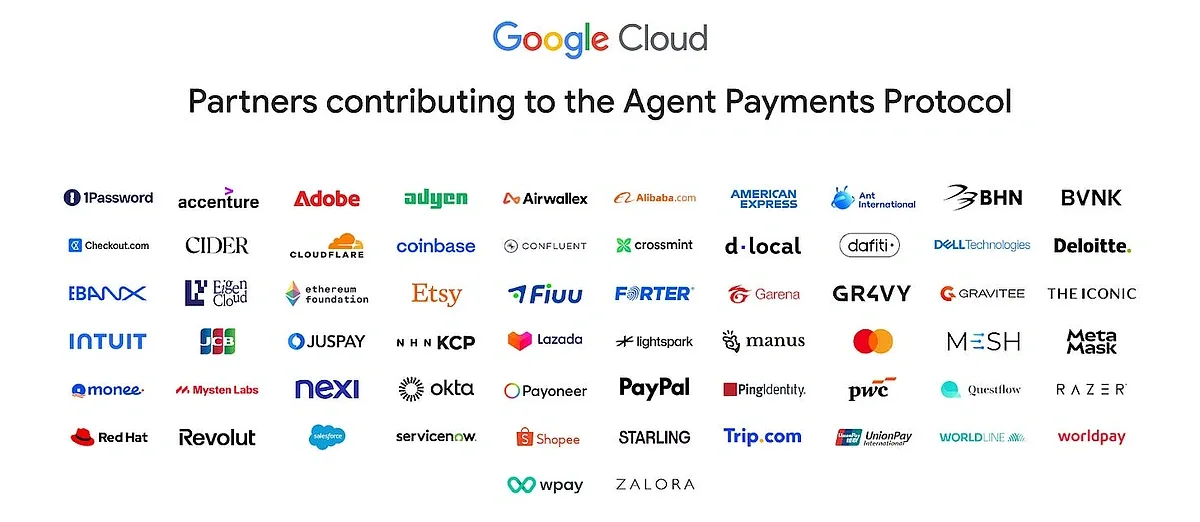
That creates a safer environment but turns an AI assistant into the equivalent of an intern with a corporate card, allowed to shop only on pre-approved venues. In effect, Google plays censor: it minimises algorithmic risk by sharply limiting market freedom.
Stripe and Tempo: a play for the mass market
Payments giant Stripe, together with Paradigm, launched the L1 Tempo mainnet. As part of the initiative the partners unveiled MPP, now being tested by Anthropic, OpenAI, Mastercard and Visa.
The new protocol lets AI agents open sessions for continuous settlement. An algorithm might reserve $100 and spend it on micropayments as it consumes compute or databases. The system automatically rolls up thousands of such transfers into a single final on-chain payment. That architecture is critical for services like DoorDash or Shopify, where high-frequency operations preclude manual confirmation.
Launching a proprietary blockchain is a logical step in Stripe’s crypto expansion. The company had already strengthened its digital-asset footprint by acquiring Bridge and wallet provider Privy. In September last year it also announced Open Issuance for stablecoin issuance and AI-powered commercial tools.
Scale gives Stripe a substantial edge. Valued at $107bn, the company annually processes $1.4trn of transactions across 195 countries. Over the year, net revenue rose 28% to $5.1bn.
JPMorgan analysts reckon the firm could lead a “twin revolution in AI and money movement”. They expect Stripe to tap a new market exceeding $350bn by decade’s end.
CoinGecko: ditching subscriptions
Aggregator CoinGecko is already demonstrating x402 in practice. The platform opened endpoints so autonomous agents can request information at $0.01 per call.
Algorithms no longer need API keys, account registrations or linked bank cards. This is pay-per-use in pure form—the bot pays for specific data directly in USDC stablecoins.
That makes the classic subscription model ill-suited to machine interaction. There is little point in a $500 monthly plan if an AI agent needs only ten requests a day to do its job.
Comparing architectures for agent payments
Tech giants prefer predictability, achieved through strict constraints. The crypto industry, by contrast, bets on efficiency and an open, permissionless design.

Stablecoins: the lifeblood of the agent economy
Volatile assets like bitcoin or Ethereum are ill-suited to machine settlement. AI agents need budget predictability, making stablecoins the foundation of the new economic system.
Bernstein analysts emphasise: “stable coins are an ideal medium for programmable logic. At the protocol level you can embed automatic revenue splits, staged payouts or escrow conditions.”
Delphi Digital points to a “new wave” of blockchains built specifically for stablecoin payments and capable of serving institutional demand.
The next wave of blockchains is built to settle payments instead of tokens.
General purpose chains weren’t designed for institutional payment flows. A new wave of chains built for stablecoin payments is filling that gap, and none of them are going after the same market.
The two… pic.twitter.com/cSycn47QXz
— Delphi Digital (@Delphi_Digital) March 20, 2026
In 2026 a notable shift occurred: USDC’s adjusted transaction volume overtook USDT for the first time in seven years. The trend reflects Circle’s focus on institutions and deep integration with second-layer (L2) networks such as Base.
Stripe already uses this setup for USDC settlements. The company understands that only high blockchain throughput and low fees make bot micropayments economically viable.
For now, the numbers are modest. Coinbase’s x402 processes about $25m a month, while Stripe’s MPP recorded just $5,000 in its first week. These figures merely reflect an early stage of development.
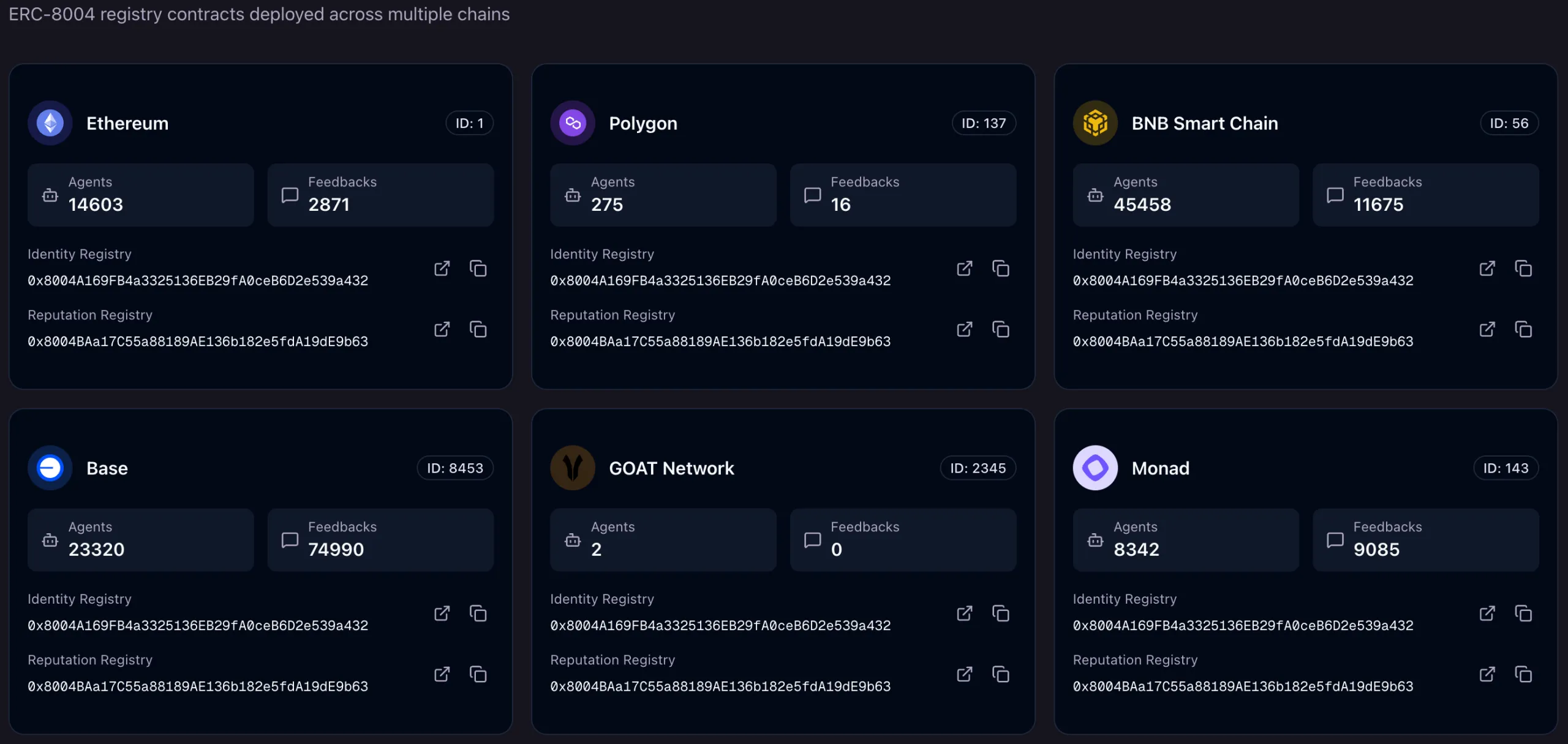
Many analysts expect the “agent internet” to become the primary consumer of stablecoin liquidity in the near future. Bot demand for stable settlement units will put heavy pressure on DeFi protocols, forcing them to adapt to algorithms rather than “degens”.
Market consequences: the advertising model in crisis
Shifting the end user from human to algorithm threatens the business models that have underpinned the internet for 30 years. The traditional attention economy—dependent on clicks and banner views—makes little sense when machines make financial decisions.
The sunset of the attention economy
a16z experts noted a fundamental problem: AI agents do not click bright links, watch video ads or respond to marketers’ emotional cues.
An autonomous bot optimises purely for the brief—price, supplier reputation and delivery speed. If programs generate most traffic, the classic ad budgets of firms like Google and Meta will lose effectiveness. Spend may shift to algorithmic subsidisation and direct influence over search datasets.
Sam Ragsdale of Merit Systems points to a historical irony. It was the advertising industry that bankrolled the open internet whose datasets later trained neural nets. Now those same technologies are steadily undermining the foundations of the classic monetisation model.
Media and labour will change
For publishers this could mean payment per verified fact or token. Instead of courting user traffic to ad-filled pages, platforms are likely to sell structured data to algorithms via microtransactions.
An “economy of outcomes” is emerging in which the prime asset is not captured attention but accuracy and freshness.
The trend will reshape employment, too. Specialists with corporate cards will give way to “agent-entrepreneurs”. Companies will assign algorithms their own budgets within set limits.
A digital assistant will be able to hire other bot subcontractors for services like rendering or data analysis to complete a task most efficiently. Humans will set overarching goals and manage the reputation of their bot fleets.
Between hype and singularity
The agent economy is not distant science fiction but a nascent reality.
The ratification of ERC-8004 and x402, the Tempo mainnet launch and CoinGecko’s micropayments integration show that the system’s basic technical frame already exists. The industry is moving from AI as a mere adviser to algorithms that can manage real assets.
For market participants, priorities are shifting. Success depends less on the size of a neural net than on the reliability and openness of the payments stack. Developers who weave financial operations into standard network requests will hold a strategic edge.
Expect transaction chains where autonomous programs hire each other. In this paradigm, on-chain reputation and L2-based stablecoin settlement will supplant paperwork. Every action by an algorithm will receive instant financial confirmation, multiplying efficiency.
The focus is changing: from basic model training to payments integration. High developer activity and rapid protocol roll-outs point to strong potential for this emerging economic model. AI agents may well prove more rational and predictable market participants than humans.
Рассылки ForkLog: держите руку на пульсе биткоин-индустрии!