



AI-Induced Inflation Challenges Tech Giants
AI infrastructure spending surges as tech giants invest trillions.
Spending on AI infrastructure continues to surge, with major tech companies poised to invest trillions of dollars in the coming years to satisfy users’ appetites for ChatGPT and Claude, according to Bloomberg.
The enormous expenditures are driven not only by hyperscalers like Microsoft and Meta investing in data centers but also by rising prices for components necessary to build massive computing facilities.
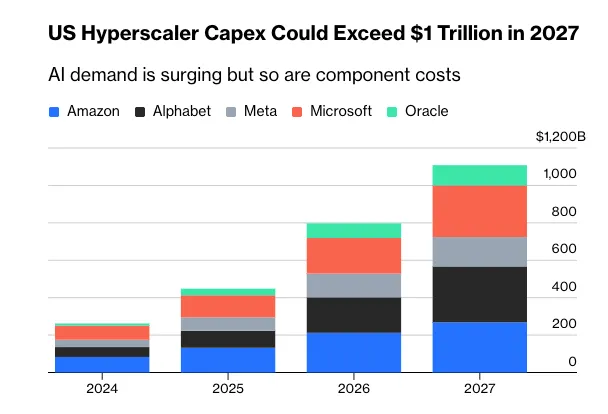
‘Chipflation’ and Investments
‘Chipflation‘ has become a problem not only for the artificial intelligence sector. Shortages also occur in traditional microchips, leading to higher prices for smartphones, gaming consoles, and other electronics.
The popularity of applications for programming and using AI agents creates demand for hardware components that support workflows: GPUs, memory, and CPUs. These components, once secondary in the AI revolution, have now become essential for workloads involving LLMs.
Some of the most profitable tech companies and well-funded startups are competing to secure enough equipment, fearing they might fall behind in the race for superintelligence.
The largest chipmaker, TSMC, plans to invest a record $56 billion. Elon Musk is considering building his own chip manufacturing plant, which could cost between $55 billion and $119 billion.
This situation is driving up the stock prices of AI equipment suppliers, outpacing most of their product buyers.
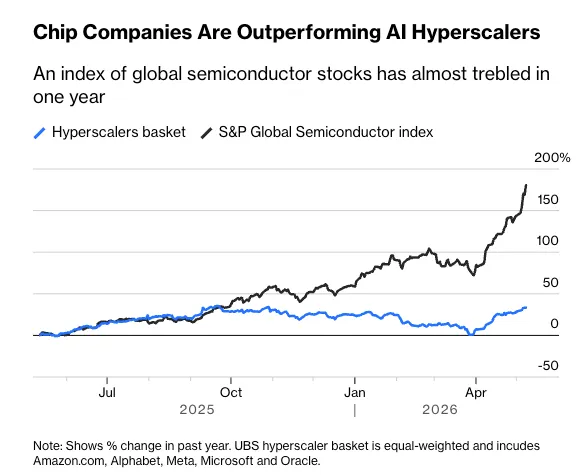
“Chip companies are thriving at the expense of everyone above them in the chain,” said James Covello, global head of equity research at Goldman Sachs.
Recent reports from hyperscalers indicate a painful blow from inflation. Microsoft expects component price increases to raise annual capital expenditures by $25 billion, reaching a record $190 billion. Meta has raised its projected spending range by $10 billion.
‘Memory Tax’
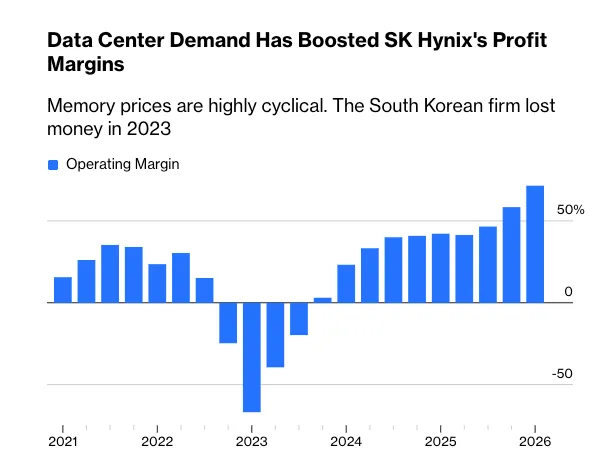
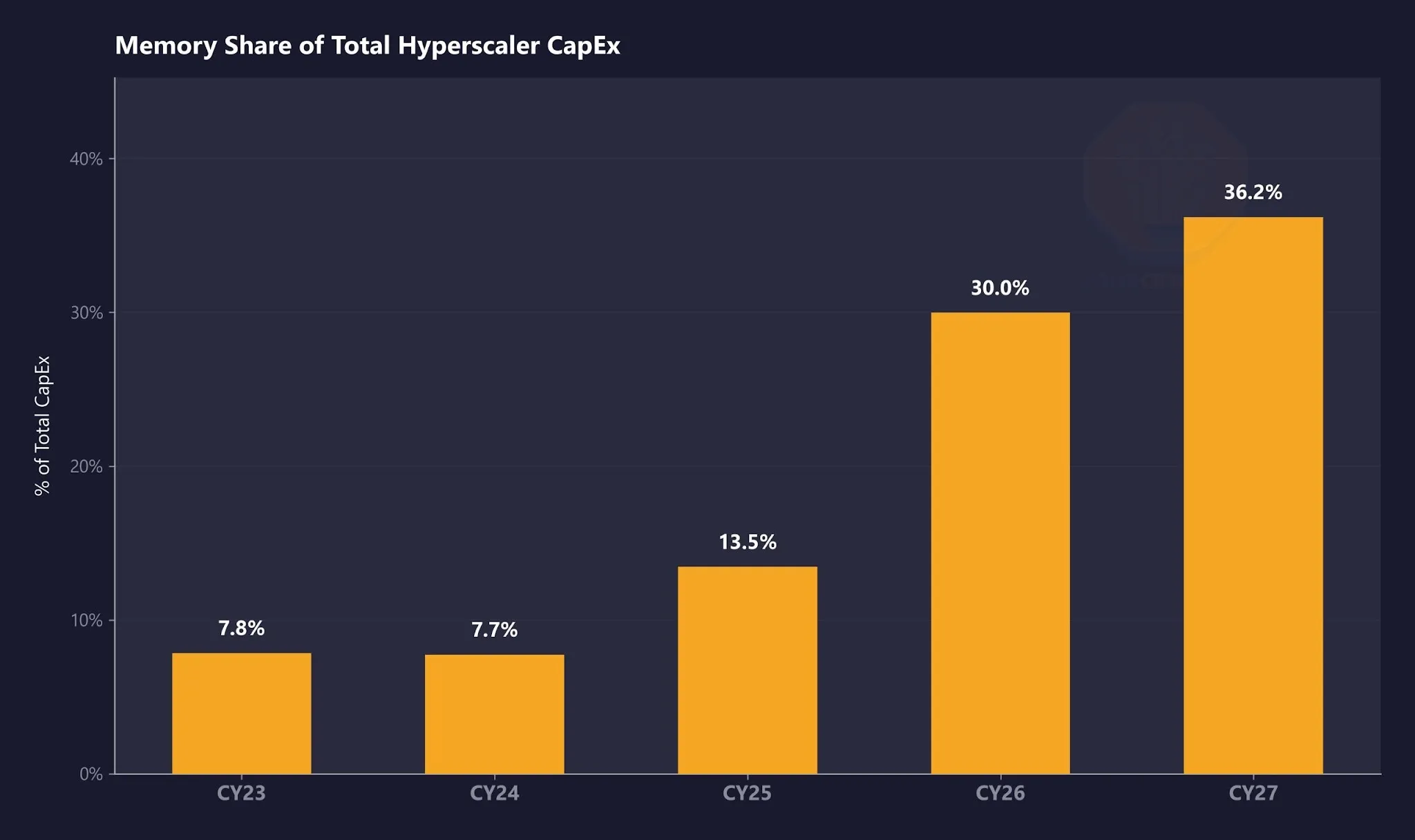
Tech corporations increasingly face a ‘memory tax’ as advanced AI accelerators require much more high-bandwidth storage.
The three largest DRAM suppliers — SK Hynix, Samsung Electronics, and Micron Technology — have become stock market favorites. Their combined market capitalization exceeds $2.8 trillion.
SemiAnalysis estimates that total spending on various types of memory will reach 30% in 2026, up from 8% in 2024.
Large investments in chips give hyperscalers an incentive to seek ways to reduce computing costs. One approach is to use alternative AI processors like AMD. Some are developing their own solutions — Alphabet’s tensor processors, Amazon’s Trainium chips, and Microsoft’s Maia 200.
Other innovations include Google’s TurboQuant compression technology, which reduces memory costs.
The Inflation Culprit
The AI frenzy is causing smartphone, gaming console, and PC manufacturers to struggle with securing memory chip supplies, as producers prioritize more profitable markets and long-term contracts.
Consumer electronics manufacturers must either pass on price increases to consumers, reduce device specifications, or accept reduced profits.
Building semiconductor plants takes years, so there is no quick response to demand.
Given the rising energy costs driven by energy-intensive data centers, artificial intelligence will continue to significantly impact inflation for some time, Bloomberg concluded.
Back in the first quarter, Samsung’s semiconductor division reported record profits, surpassing expert expectations.
Рассылки ForkLog: держите руку на пульсе биткоин-индустрии!