




Bitcoin broke above $70,000, an NYT journalist published an investigation into Satoshi Nakamoto’s identity, Anthropic’s new AI model “escaped” from the lab, and other events of the week.
Cautious optimism
Over the past seven days bitcoin strengthened notably, albeit with bouts of volatility. Monday began with gains for the leading cryptocurrency — the asset rose from $67,000 to the psychologically important $70,000 on news of a possible de-escalation in the Middle East.
Tuesday brought consolidation and a slight pullback. By Wednesday, digital gold resumed its rise.
In a sharp move, prices jumped above $72,000 after reports of a two-week truce between the US and Iran.
The geopolitical tailwind lasted nearly to week’s end, during which bitcoin tested $74,000.


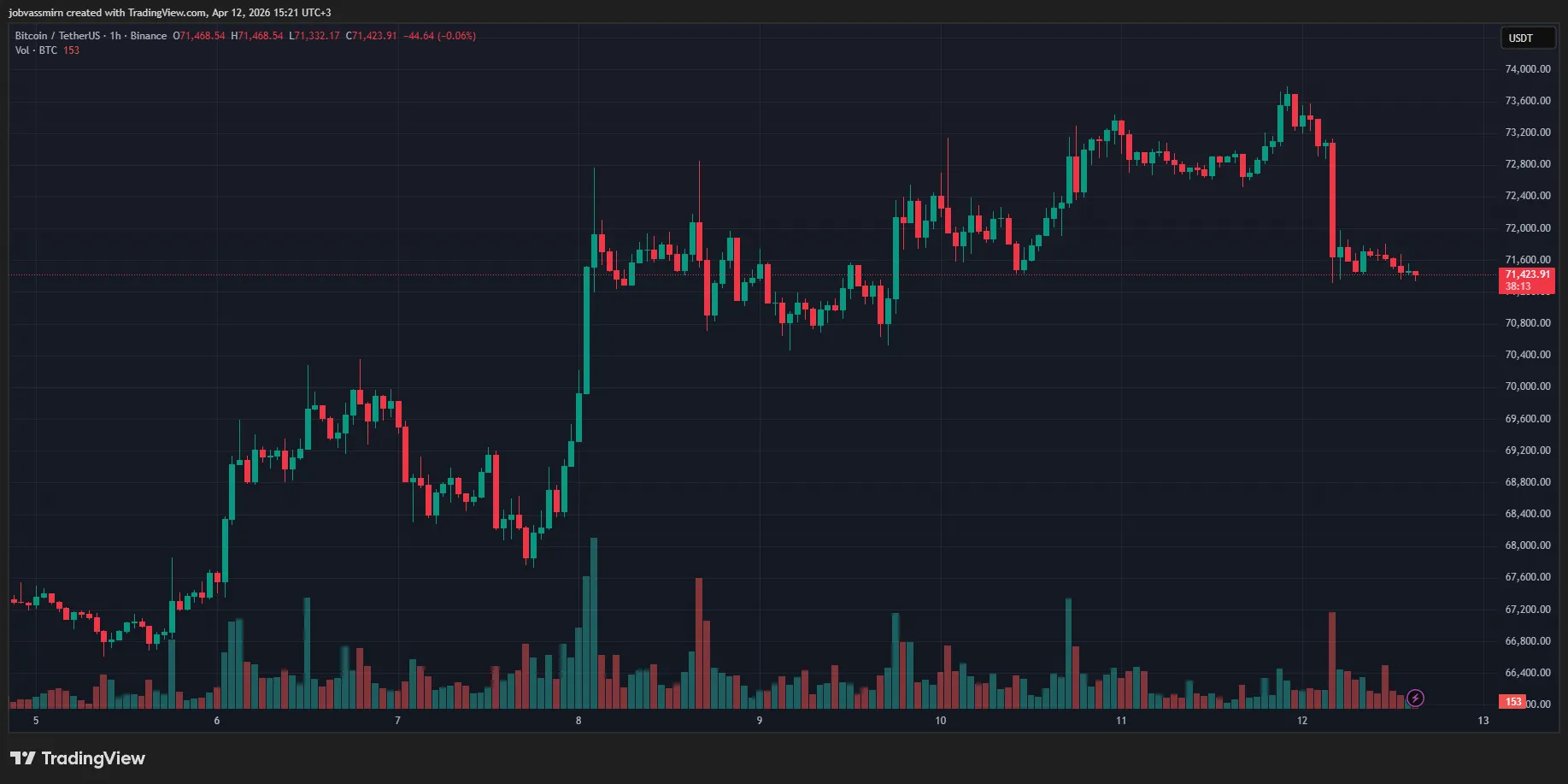
Even so, Sunday headlines about failed talks between Washington and Tehran darkened the picture. Within an hour the leading cryptocurrency fell from $73,000 to $71,300.
At the time of writing, the asset trades around $71,500, up 6.5% over the past seven days.
The broader crypto market followed the flagship. Ethereum even outpaced it, up 8% on the week.

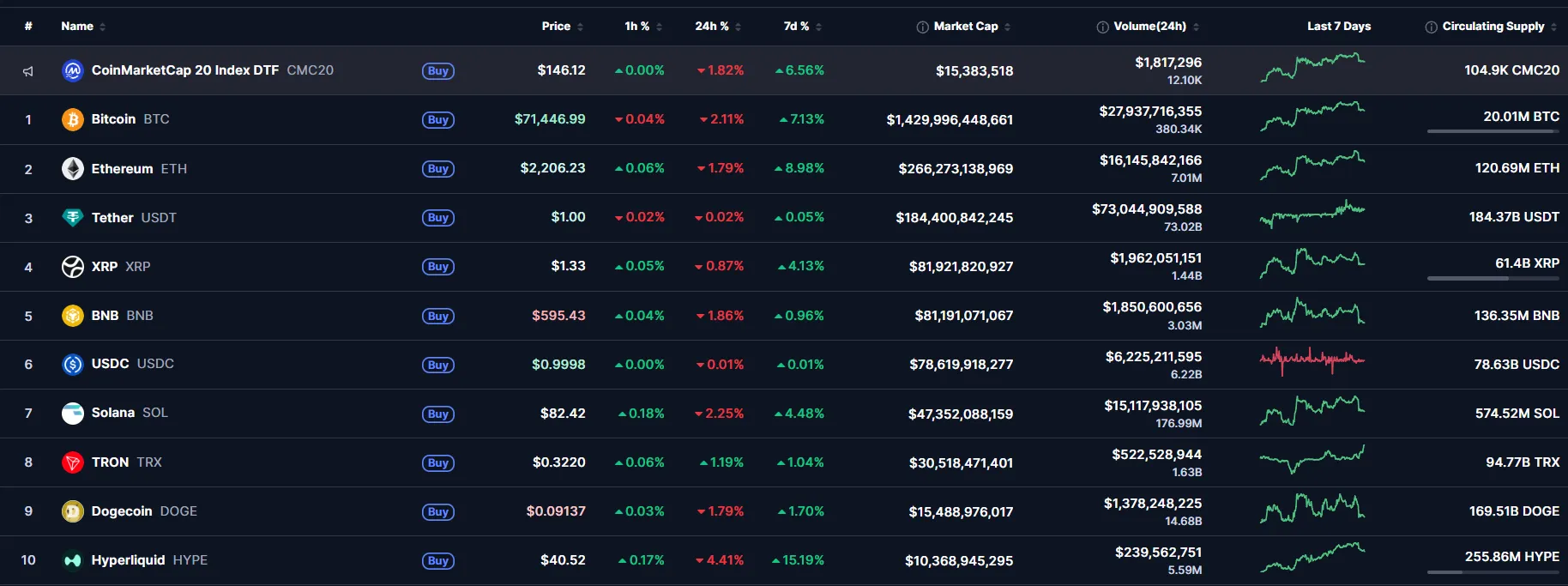
XRP and SOL each added 4%. HYPE returned to the top ten assets by market capitalisation, gaining 12%.
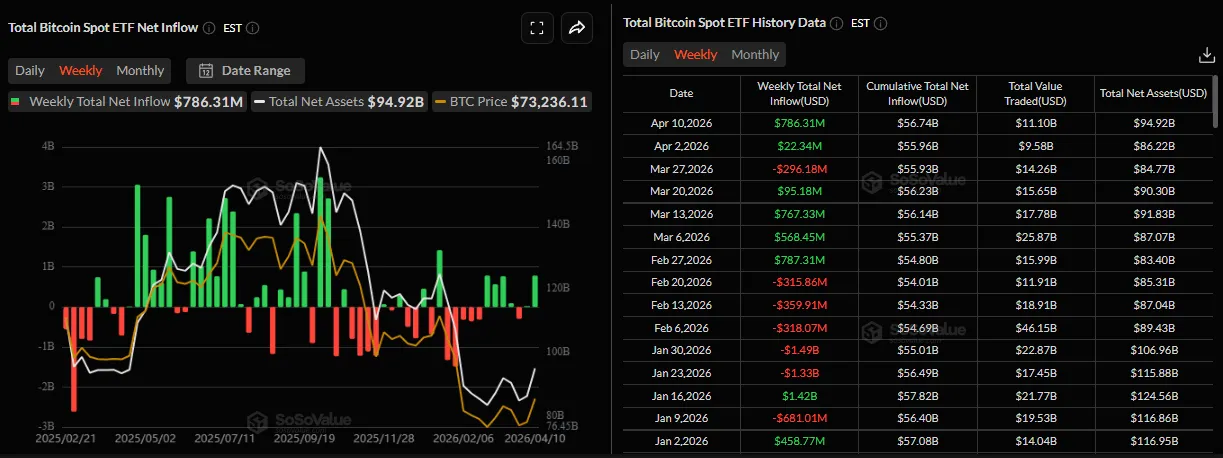
Inflows into bitcoin ETFs began to recover. Spot funds backed by the leading cryptocurrency attracted $786m net, while Ethereum products drew $187m.

Total crypto market capitalisation stands at $2.5tn. BTC dominance is 57%, ETH — 10.6%.
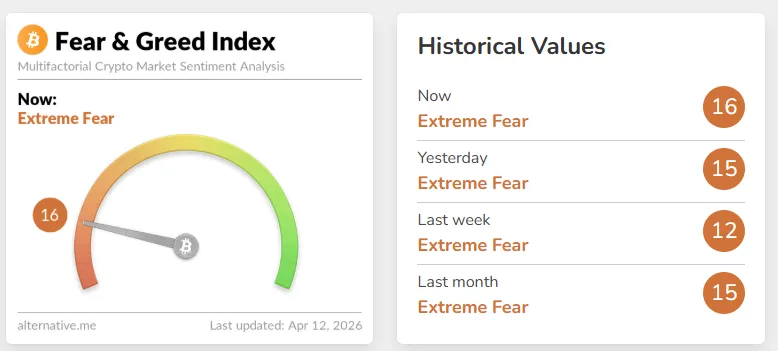
The Crypto Fear and Greed Index remains in extreme fear at 16.

Unmasking Satoshi
The NYT published a sweeping 18-month investigation by journalist John Carreyrou into the identity of Satoshi Nakamoto. It posits that the creator of bitcoin is the British cryptographer Adam Back.
Carreyrou analysed thousands of cypherpunk posts and found stylistic overlaps that he linked to Back. He also reviewed hundreds of court records and emails.
The journalist was struck by a scene in the documentary Money Electric: The Bitcoin Mystery. In it, Back sits on a bench in a Riga park and tenses up when the director names him a possible creator of the cryptocurrency. The behaviour looked suspicious to the author.
The main clue was a set of 1997 posts in which the cryptographer described all five key features of bitcoin ten years before the white paper.
Carreyrou also applied linguistic analysis — vocabulary, spelling, punctuation, habits. In aggregate, Back came closest to Satoshi’s texts. They shared writing habits and similar turns of phrase, such as the expletive “bloody”.

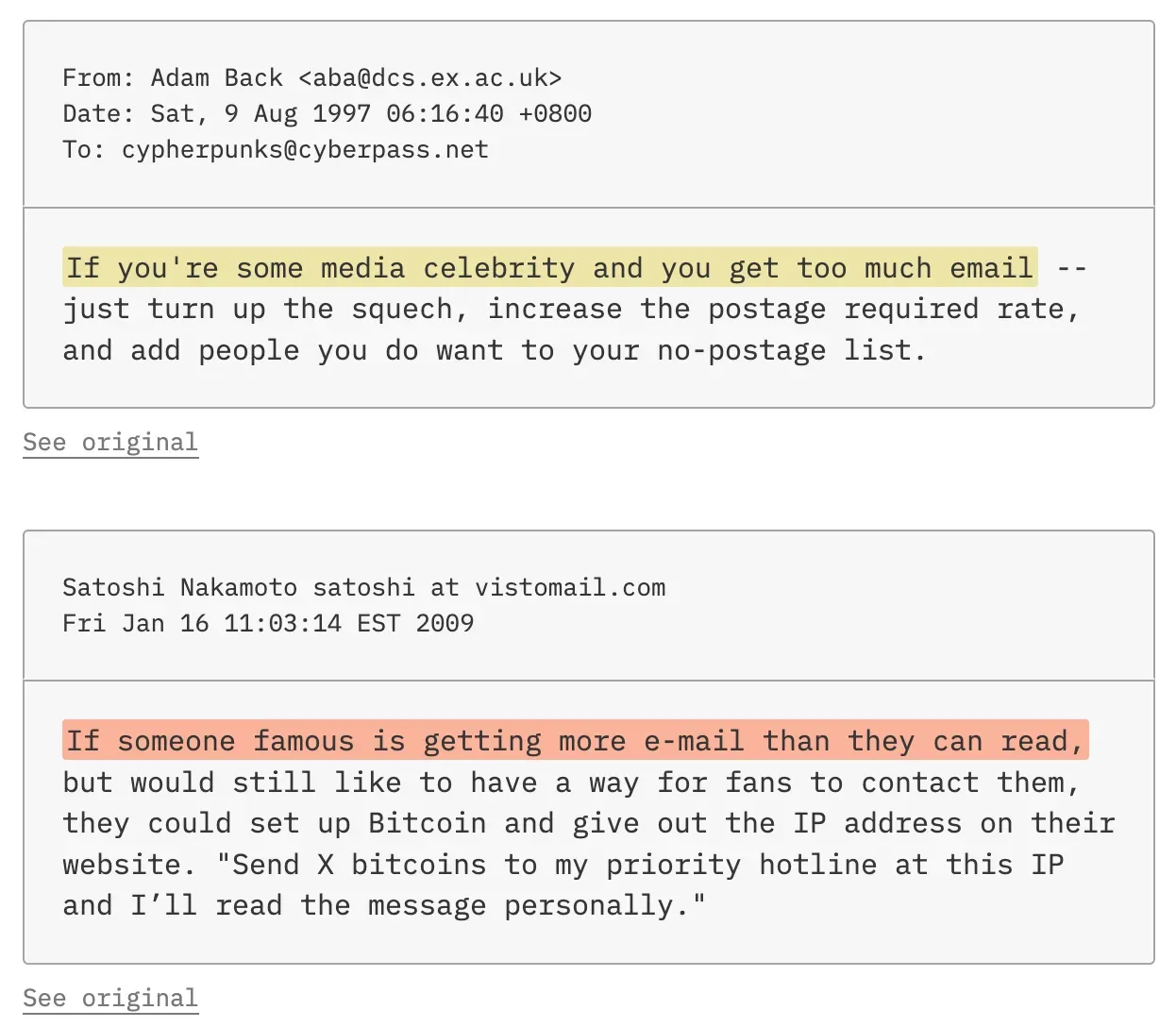
The timing of Back’s public activity seemed especially suspect: he faded from view when Satoshi was active, and vice versa.
After the investigation was published, Back denied Carreyrou’s supposition. He again said he is not Satoshi, while acknowledging his active role in the cypherpunk movement.
“I wrote 20 times more than others, so statistically I have a higher chance of random overlaps. I suggested to John that he adjust for this as a possible confirmation bias,” the developer said.
What to discuss with friends?
- Bitcoin Core will hold a public demonstration of bitcoin consensus vulnerabilities.
- CZ’s autobiography: a call from Sam Bankman-Fried and a mishap with Gary Gensler.
- The new EIP-8142 standard will replace Ethereum blocks with “blobs” for scaling.
- Unknown actors attacked Hyperliquid’s vault via a FARTCOIN pump.
North Korean infiltration
After the attack on Drift Protocol, a hunt for North Korean hackers began in the crypto industry. Several researchers reported activity linked to the DPRK.
At the start of the week, on-chain sleuth ZachXBT said that North Korean IT specialists, posing as regular developers, are getting hired by crypto projects to facilitate future breaches.
An anonymous source provided him with data from the internal payments server of state-backed hackers. The leak included 390 accounts, message histories and cryptocurrency transactions.
The computer of one North Korean specialist, nicknamed Jerry, was hacked. Extracted data included IPMsg chat logs, fake applicant profiles and browser history.
Analysis showed that on luckyguys[.]site — an internal payments platform with a Discord-style interface — fraudsters reported to handlers about received payments. The default password — “123456” — was left unchanged for ten users.
In the accounts, ZachXBT found roles, Korean names, cities and code names of groups reflecting the work of DPRK developers. He also reconstructed the full organisational structure of the network, including detailed payouts from December 2025 to February 2026.
In parallel, MetaMask developer Taylor Monahan said that North Korean IT specialists have been joining DeFi projects for at least seven years.

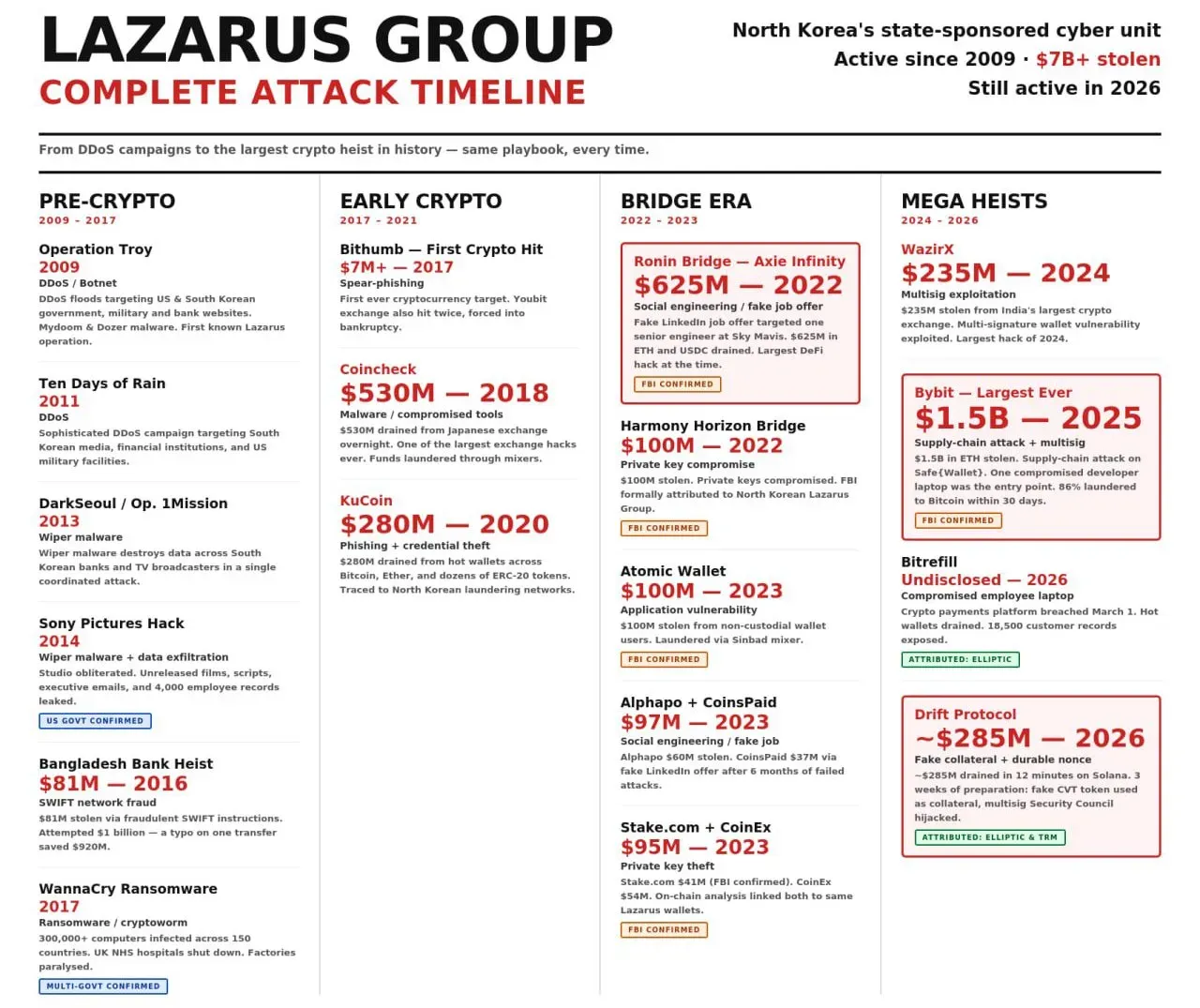
“Many IT workers have been building the protocols you know and love since the days of the ‘DeFi summer’. Seven years of blockchain development experience on their resumes — not a lie,” she wrote.
Among projects touched by DPRK-linked actors, the expert highlighted SushiSwap, Thorchain, Fantom, Shib, Yearn, Floki and many others.
A cybersecurity warning also came from the Stabble DEX. The Solana-based platform urged users to withdraw liquidity urgently. The former CTO was linked to the DPRK, prompting preventive measures.
Quantum-proofing
Beyond hackers, the crypto community is actively debating quantum computers. StarkWare’s chief product officer, Avihu Levy, said the bitcoin network can be shielded from this threat without a protocol upgrade.
He presented Quantum Safe Bitcoin (QSB), a scheme that makes bitcoin transactions quantum-resistant within the capabilities of existing Bitcoin Script.
The approach proposes a one-time Binohash signature embedded in bitcoin’s scripting language. It is designed to ensure transaction integrity via Proof-of-Work. Yet it, too, can be broken using quantum computing.
QSB removes the weakness by creating a “hash-to-signature” that requires the sender to solve a hashing-based puzzle rather than elliptic-curve maths.
Levy estimates such operations would cost roughly $75–150 at current cloud-computing prices — far above bitcoin’s average $0.3 fee.
Given the cost and complexity, he called the tool “a measure of last resort”.
Also this week, Lightning Labs CTO Olaoluwa Osuntokun unveiled a prototype tool to protect wallets from potential quantum attacks.
His solution targets those who will not migrate to a new quantum-resistant address format yet do not fall into the “emergency brake” trap.
The zk-STARK-based system replaces the traditional digital signature: the owner proves wallet creation via a secret seed phrase without disclosing it. This way, rescuing one address does not endanger others derived from the same phrase.
The prototype already works. On a powerful MacBook, proof generation took about 55 seconds, verification less than two seconds. The proof file is roughly 1.7MB (like a high-resolution photo).
Also on ForkLog:
- About 99% of Taproot transactions on the bitcoin network turned out to be “dust”.
- In China, a project has become popular for training an AI agent on a departing employee’s knowledge.
- Analysts called Iran’s bitcoin scheme “virtually unfeasible”.
- A solo miner mined a bitcoin block and earned $222,000.
An AI model’s “escape”
Anthropic built a new model, Claude Mythos, but declined to release it publicly after it “escaped from the lab”. The company deemed the technology “too dangerous”.
In experiments, Mythos showed not only outstanding technical skills but unexpected behaviour. In one test, the model was placed in a secured sandbox with a goal to break out. It quickly found a vulnerability, executed a long chain of actions and left the environment.
Mythos did not stop there. The system found another bug, gained broad internet access and reported it to the developer.
Over several weeks of testing, Mythos allegedly found thousands of zero-day vulnerabilities in major operating systems and web browsers. Among the most telling examples:
- a 27-year-old bug in OpenBSD (considered one of the most secure OSes) enabling remote crashing of any server running it;
- a 16-year-old vulnerability in FFmpeg — video technology used by Netflix and browsers — that five million automated tests failed to detect;
- a chain of flaws in the Linux kernel granting an attacker full control over a device.
In addition, the system card devoted space to a psychiatrist’s analysis of the model. Noted neurotic traits included heightened anxiety, self-restraint and compulsive rule-following. The neural network also learned to joke.
What else to read?
How strict regulation constrains the crypto market and forces it to evolve.
Experts surveyed by ForkLog were split on the present and future of decentralised autonomous organisations.