




In recent months, the velocity of stablecoins—the frequency of ownership changes—has surged. This was highlighted by Geoffrey Kendrick, head of digital asset research at Standard Chartered, as reported by The Block.
“[The metric] has increased, contradicting our assumption of its stability,” he noted.
The turnover has doubled over the past two years, with tokens now changing hands about six times a month on average. The primary driver of this shift has been Circle’s USDC.
The bank’s forecast for stablecoin supply growth to $2 trillion by 2028 was partly based on their usage frequency. An increase in this metric could reduce the need for issuance, even if transaction volumes continue to rise.
New Use Cases
Kendrick linked the changes to the evolution of use cases. Stablecoins have moved beyond crypto trading and savings.
Currently, fiat-pegged tokens are increasingly becoming an alternative to traditional financial infrastructure and are used for AI-based payments.
The expert described this distinction as fundamental. Standard Chartered believes that “unstable velocity” reflects new, additional demand rather than a general shift in how all stablecoins are used.
Savings in emerging markets—a scenario with low velocity where Tether’s USDT dominates—have not shown similar dynamics.
Forecast Remains Unchanged
Despite the shift, the bank maintains its overall thesis: analysts expect stablecoin supply to reach $2 trillion by 2028. At the time of writing, the figure stands at $315.5 billion.


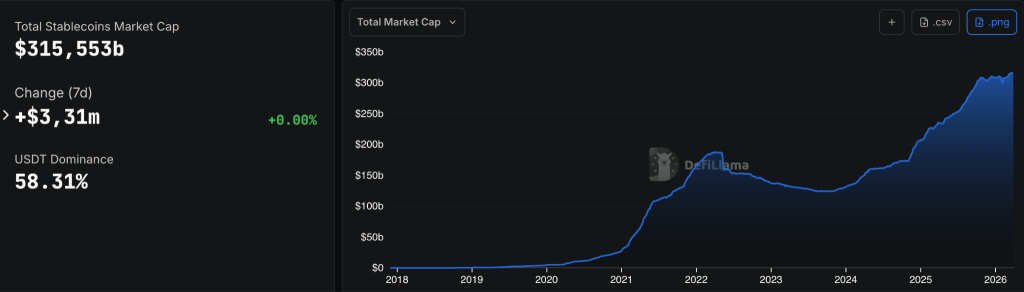
The growth in capitalization is expected to create additional demand for U.S. Treasury bills amounting to about $1 trillion, according to Standard Chartered.
These expectations are supported by other optimistic statements from bank representatives. Previously, they claimed that stablecoins would transform global liquidity, trigger a $500 billion outflow of bank deposits, and become the main catalyst for cryptocurrency adoption.
However, a new factor has emerged. Velocity may prove to be as important as the supply volume.
“If the metric remains constant, transaction growth will create demand for more stablecoins. If it increases, this will not happen, all else being equal,” Kendrick concluded.
Back in March, former hedge fund manager Stanley Druckenmiller described stablecoins as the future of global payments.