



Scientists Develop AI-Powered Virtual Rat
Researchers from Harvard and Google DeepMind have developed a virtual rat with an artificial intelligence brain capable of accurately mimicking the movements of real rodents.
The experiment aimed to compare the neural activity of a real rat with that of a virtual one, enhancing the understanding of how the brain controls complex, coordinated movements.
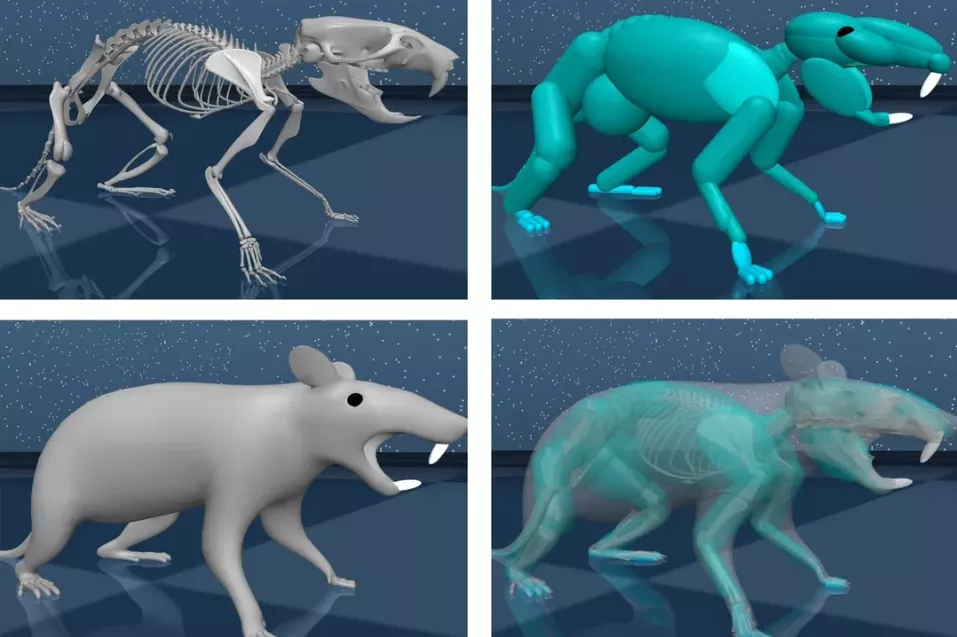
“We found that neural activity was better predicted in the virtual rodent than in the real rat,” experts noted.
The neural network of the virtual rat was trained using data from real rodents. The work was conducted in the MuJoCo simulator, which accounts for physical forces like gravity to replicate real-world conditions.
“We learned a lot by creating an AI system that must not only think intelligently but also translate that thinking into physical actions in a complex environment. Using such an approach in the context of neurobiology is beneficial for understanding brain behavior and functions,” said co-author and senior research director at Google DeepMind, Matthew Botvinick.
Researchers believe the studies could significantly enhance the agility of future robots and lead to new treatments for musculoskeletal disorders by recreating neural connections.
The next step will be to grant the virtual rat autonomy to tackle challenges faced by real animals.
In April, the Israeli company Mentee Robotics unveiled an AI-powered android.
Earlier, Boston Dynamics developed a new type of Atlas robots.
Рассылки ForkLog: держите руку на пульсе биткоин-индустрии!