




In the first quarter, perpetual futures on oil and precious metals accounted for over 67% of the trading volume of HIP-3 contracts on the Hyperliquid exchange, according to a study by Sygnum Bank.
💡Sygnum Bank’s Digital Nugget: Are traditional assets finding a home on decentralised rails?
We are now witnessing a shift in the form of crypto exchanges (both centralised and decentralised) offering exposure to traditional assets, with volumes now reaching impressive levels… pic.twitter.com/zSE2Hh103g
— Sygnum Bank (@sygnumofficial) March 26, 2026
Previously, the majority of activity (90%) in user-defined markets was concentrated on indices. Now, their share has decreased to 17%.
Record Activity
Analysts linked the trend shift to investors moving from altcoins to traditional assets amid geopolitical instability. The conflict in the Middle East led to logistical disruptions in the Strait of Hormuz, through which a fifth of the world’s oil passes.
The subsequent rise in prices triggered a surge in oil derivative trading. Experts emphasize that traditional platforms do not operate at night and on weekends, although significant news events often occur during these times. In such conditions, round-the-clock on-chain contracts have become the only way to hedge risks in real time.


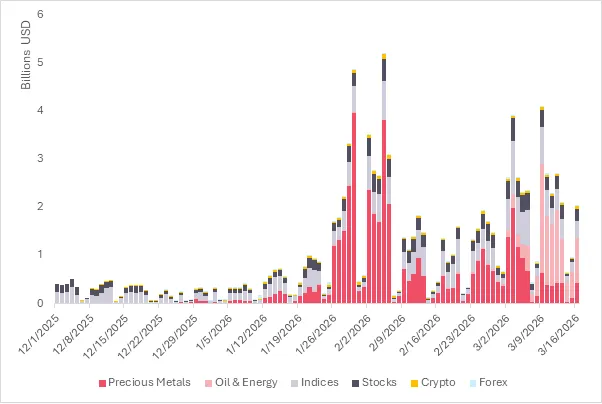
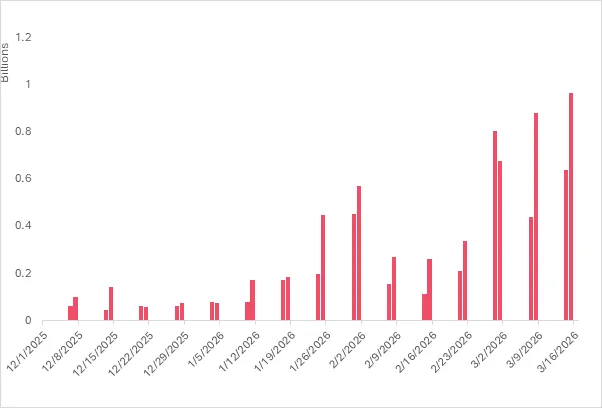
Since January, trading volumes of HIP-3 on weekends have increased ninefold. As a result, Hyperliquid’s daily turnover in March reached a record $5.4 billion.

HYPE Support
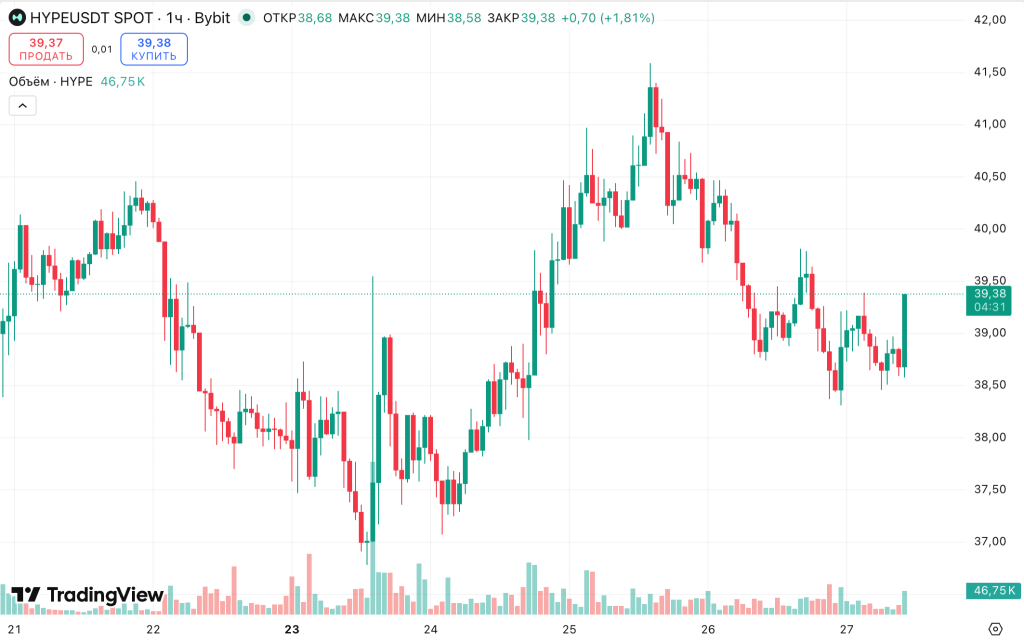
New “micro-markets” have evolved into full-fledged trading platforms, according to Sygnum. They provide the exchange with additional commission income, accelerate token buybacks, and support the price of the native HYPE coin.
Since the beginning of the year, the asset has appreciated by 62%. Meanwhile, Bitcoin has lost 20%, and Ethereum 29%.


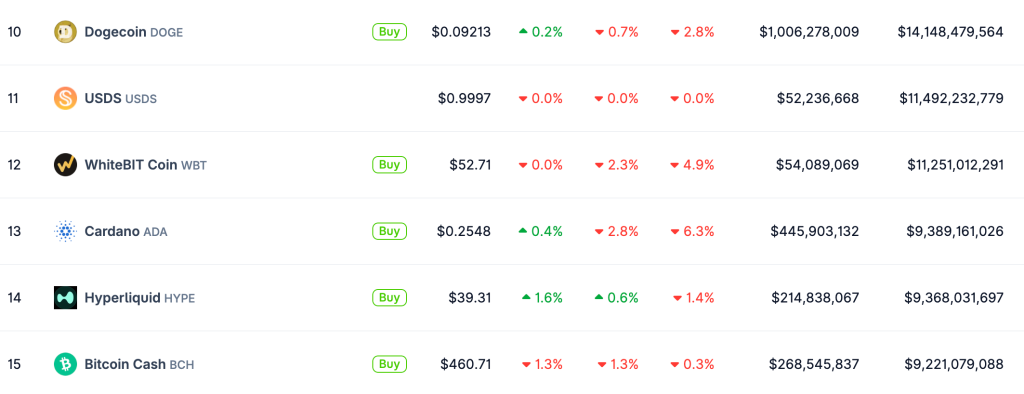
HYPE also entered the top 15 cryptocurrencies by market capitalization, reaching $214.8 million.


Sygnum’s Forecast
Analysts note a growing interest in commodity markets: in March, Binance launched trading of WTI oil and natural gas contracts through the Binance Wallet service.
Traditional platforms are also increasingly exploring the segment of tokenized securities. Last week, the SEC approved a joint pilot project by Nasdaq and Kraken for trading digitized high-liquidity stocks.
Simultaneously, Intercontinental Exchange — the parent company of the NYSE — invested in OKX. Users of the platform will be able to trade tokenized securities and derivatives listed on the New York Stock Exchange.
Sygnum believes that TradFi will continue its gradual transition to on-chain, although for now, this demand is largely met by specialized decentralized platforms like Hyperliquid.
“If altcoins remain merely proxy instruments for Bitcoin amid low liquidity, cryptocurrency users may shift to traditional assets with a better risk-reward ratio,” experts noted.
A broad shift towards risk would require de-escalation in the Middle East and the reopening of the Strait of Hormuz. However, the current environment only accelerates the adoption of tokenized RWA by both TradFi and the crypto market.
In March, NYSE engaged Securitize to launch trading of digitized stocks.
Asset manager Franklin Templeton announced a partnership with Ondo Finance. The company will issue tokenized versions of its ETFs, which will be directly accessible through crypto wallets.