


Bitcoin Falls Below $71,000 Amidst Trump’s Decision to Block Hormuz Strait
Bitcoin falls below $71,000 as US prepares to blockade Hormuz Strait.
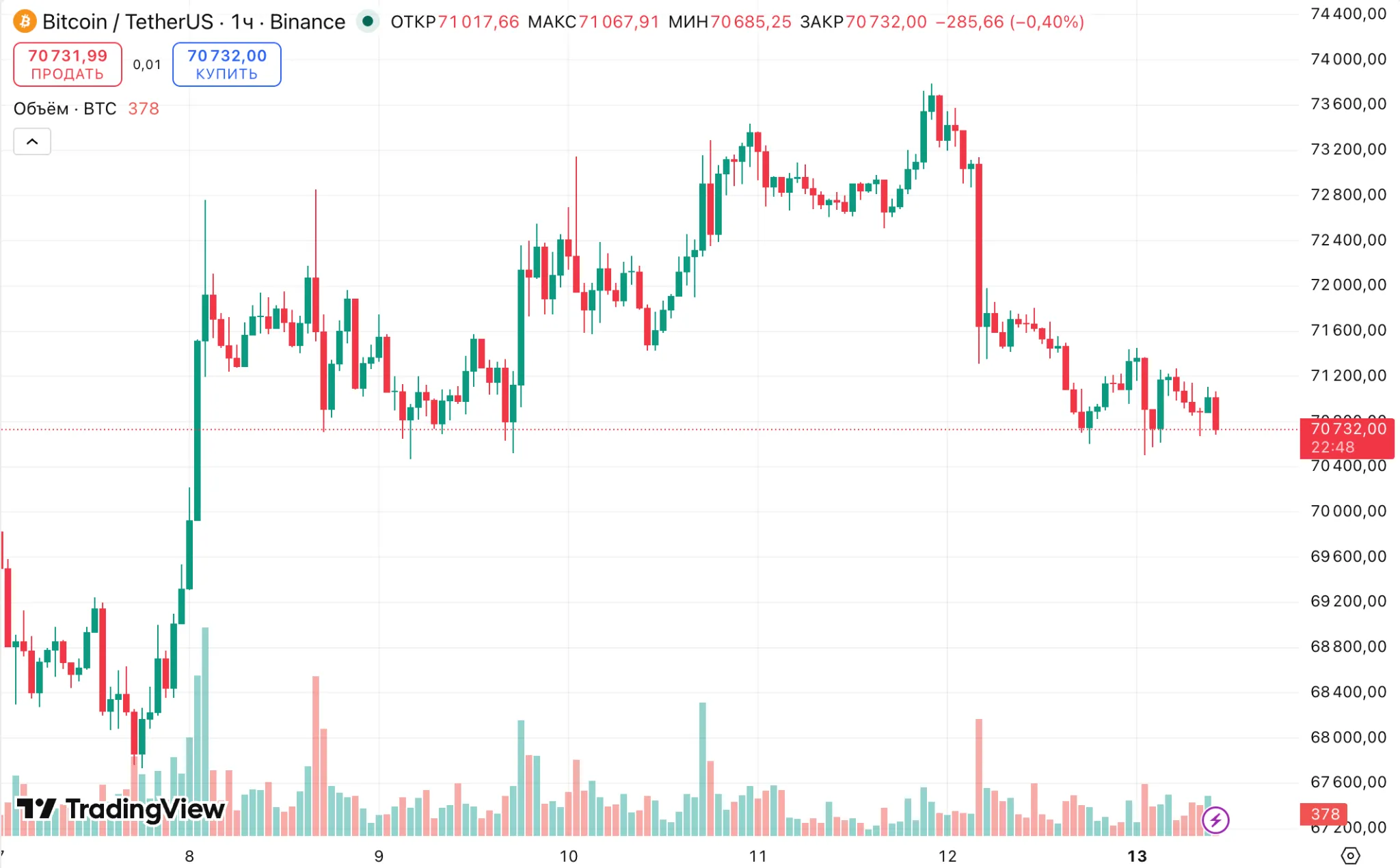
The collapse of negotiations and the US’s preparation to blockade the Hormuz Strait have negatively impacted markets. In the past 24 hours, the price of the leading cryptocurrency has fallen by 1.4%, dropping below $71,000.
At the time of writing, the asset is trading around $70,700.
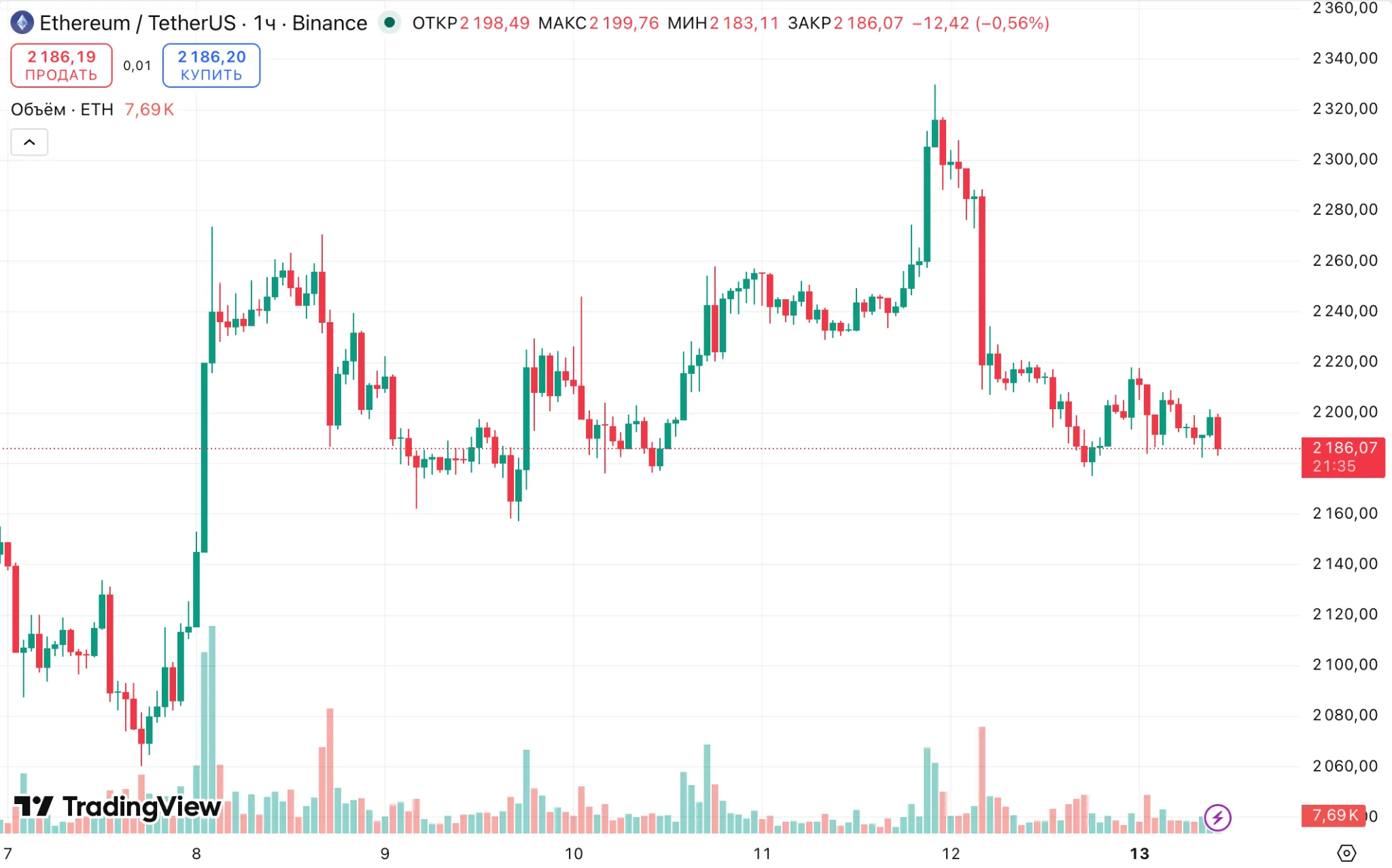
The Ethereum rate fell by 1.5% to $2180.
Negotiation Failure and Hormuz Blockade
On April 11, talks between the US and Iran took place in Islamabad. The parties failed to reach a resolution, prompting a mass exodus of investors from risky assets, noted BTC Markets analyst Rachel Lucas.
13th April 2026 Daily crypto wrap: Geopolitical headlines dominated crypto markets today as US-Iran peace talks in Islamabad collapsed after 21 hours, triggering a sharp risk-off move. Bitcoin pulled back from near US$74,000 to around US$70,500 following President Trump’s…
— Rachael (@Rachael_M_Lucas) April 12, 2026
US Vice President J.D. Vance accused Tehran of refusing to accept the proposed terms. In response, Iranian authorities called Washington’s demands “unreasonable.”
Following the diplomatic setback, US President Donald Trump announced the blockade of shipping in the Hormuz Strait starting April 13. The restrictions will affect all vessels entering or leaving Iranian ports. According to the WSJ, the plan aims to deprive the country of the ability to export oil.
Additionally, Trump and his advisors are considering resuming strikes on Iran. Markets are already pricing in the risks of escalation. WTI crude oil futures rose by 7% to $103. Brent contracts showed similar dynamics, rising by 6.7% to $101.
The First Institutional Cycle
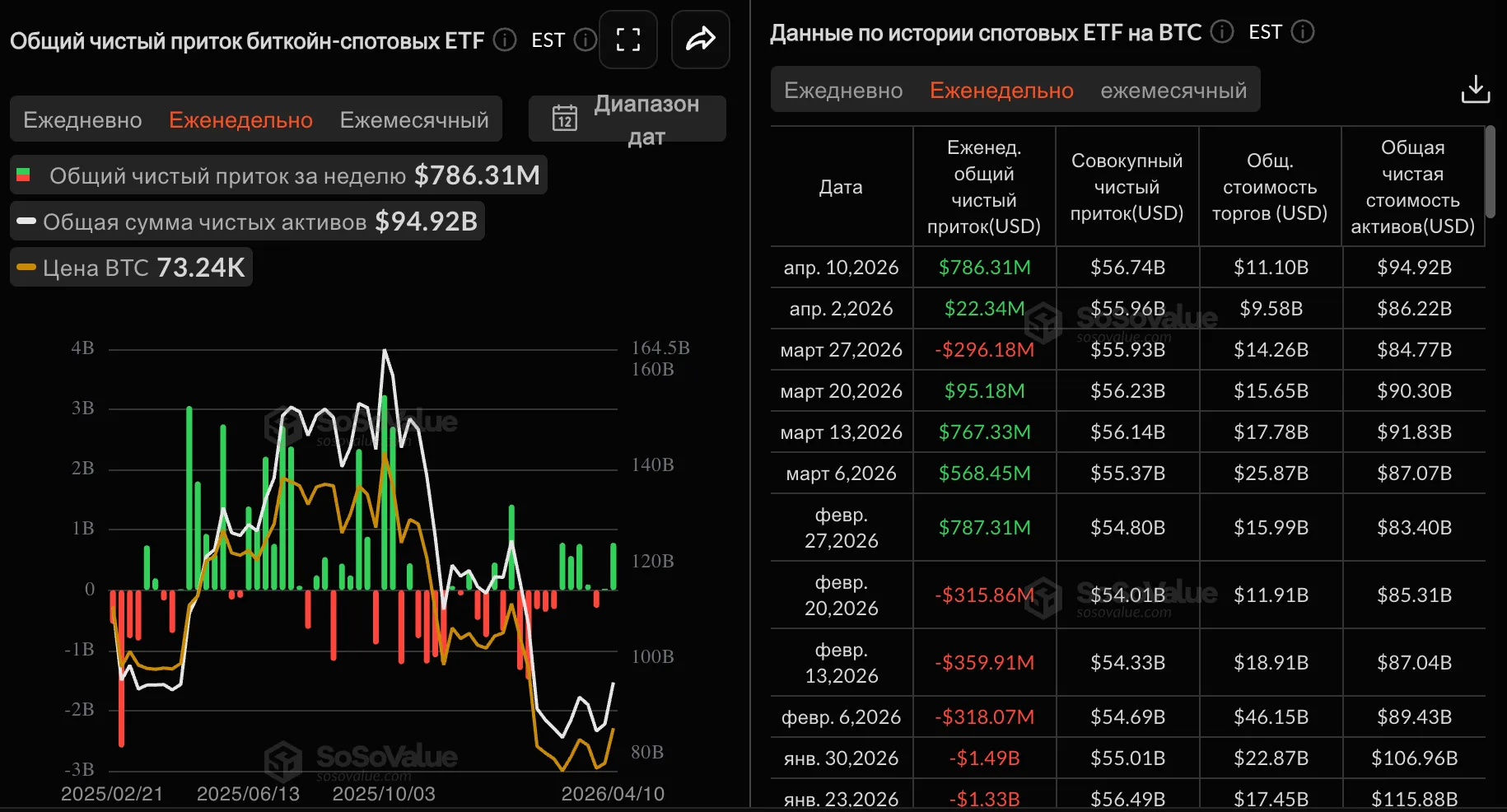
Lucas emphasized that despite short-term fluctuations, the institutional foundation remains strong. She pointed to the dynamics of spot bitcoin-ETF, which showed the strongest weekly capital inflow since February.
Exodus CEO JP Richardson noted that this year financial institutions have generally “accelerated” their presence in the crypto market, while retail investors have been leaving.
This might be the first cycle in crypto history where institutions are in a bull market and retail doesn’t even know it.
Stablecoins at $319B. Morgan Stanley launched a Bitcoin ETF. Schwab opened a waitlist for spot bitcoin trading.
Franklin Templeton announced a crypto…
— JP Richardson (@jprichardson) April 13, 2026
“This might be the first cycle in crypto history where institutions are in a bull market and retail doesn’t even know it,” he wrote.
Richardson listed examples:
- record growth in stablecoin capitalization;
- Bitcoin ETF by Morgan Stanley;
- launch of Schwab Crypto platform in the first half of 2026;
- Franklin Templeton’s crypto division;
- mortgage loans backed by digital gold from Fannie Mae.
“In 2018 and 2022, institutions exited alongside retail. This time they stayed and became more active,” he noted.
MN Fund founder Michaël van de Poppe supported Richardson’s view. According to him, private investors are no longer interested in cryptocurrencies.
It’s super clear that retail isn’t interested in #Crypto.
Almost everyone has a hard time paying their bills on a monthly basis.
And then spending that amount of money in such a volatile asset?
Hell no.
That’s why this cycle won’t be the retail cycle. It’s the institutional…
— Michaël van de Poppe (@CryptoMichNL) April 12, 2026
“It’s hard for everyone to pay bills now. Investing money in volatile assets? Definitely not. That’s why the current cycle is not retail but institutional, and it will last longer,” the analyst stated.
Earlier in April, the activity of small bitcoin investors dropped to its lowest level since 2017.
Рассылки ForkLog: держите руку на пульсе биткоин-индустрии!