



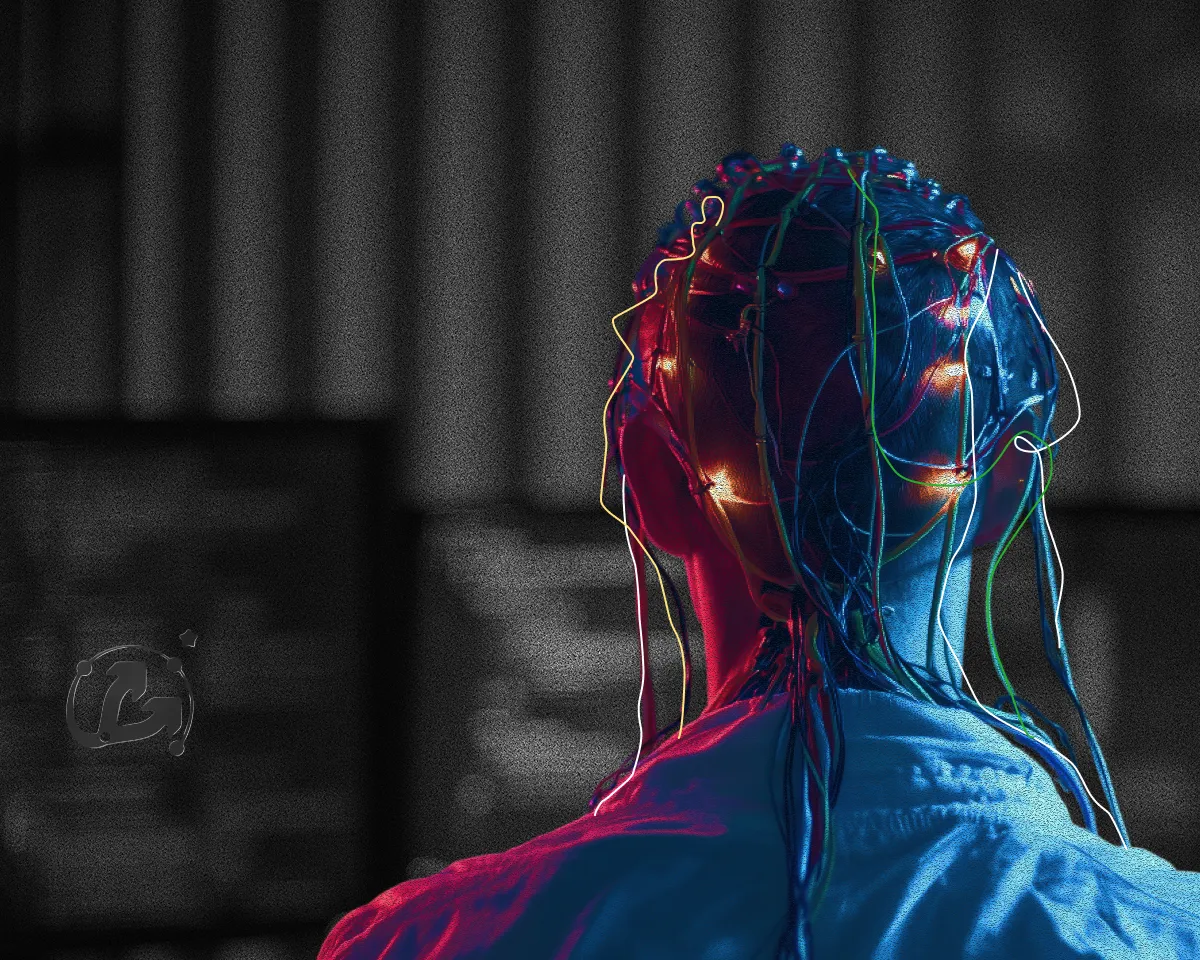
The brain–computer interface (BCI) industry is in the midst of an investment boom, presenting itself as science fiction made real. Companies are racing to connect the human brain to the digital realm, promising not only help for paralysed patients but cognitive superpowers for healthy people.
Having reviewed research-team data, corporate reports and the state of play, ForkLog examines where the technology stands—and who is truly carving up the market.
Beyond Musk: who is carving up the market
Despite the impression created by our information bubble that every headline concerns Neuralink, the market has long been split among invasive, minimally invasive and non-invasive approaches—where real breakthroughs are being made by many independent teams.
Neuralink’s chief rival is often said to be Synchron, whose Stentrode technology avoids open-skull surgery. The device is fed in via the jugular vein and positioned inside a blood vessel near the brain’s motor cortex—an approach that has helped the firm to the front of the regulatory queue.

Patients in the US and Australia already control Apple devices with their thoughts, although transmitting signals through a vessel wall trims bandwidth somewhat.

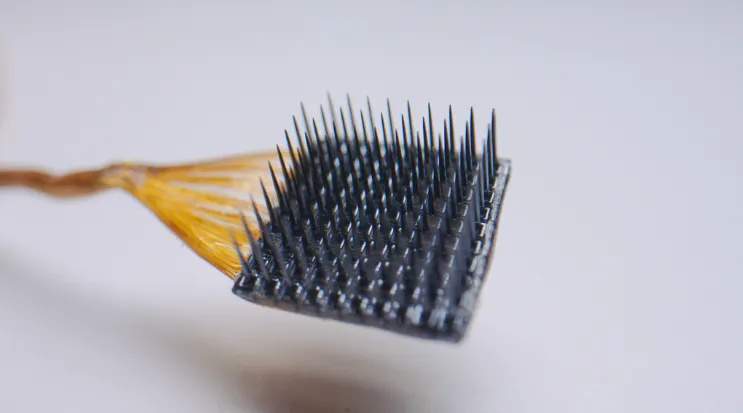
The industry’s veteran and bedrock is Blackrock Neurotech. Its wired Utah Array system has underpinned leading academic research since 2004 and is rightly deemed the gold standard. Dozens of patients have lived with these implants for years, and the manufacturer is preparing a commercial launch of an updated platform.


Precision Neuroscience—founded by alumni of Elon Musk’s company—offers an intriguing alternative. It has developed an ultrathin electrode array that is laid on the brain’s surface through a tiny incision, entirely avoiding penetration of neural tissue.

Meanwhile, Tsinghua University in China is deploying a minimally invasive implant, NEO, which is mounted beneath the skull and has already enabled a fully paralysed patient to control a mechanical exoskeleton.

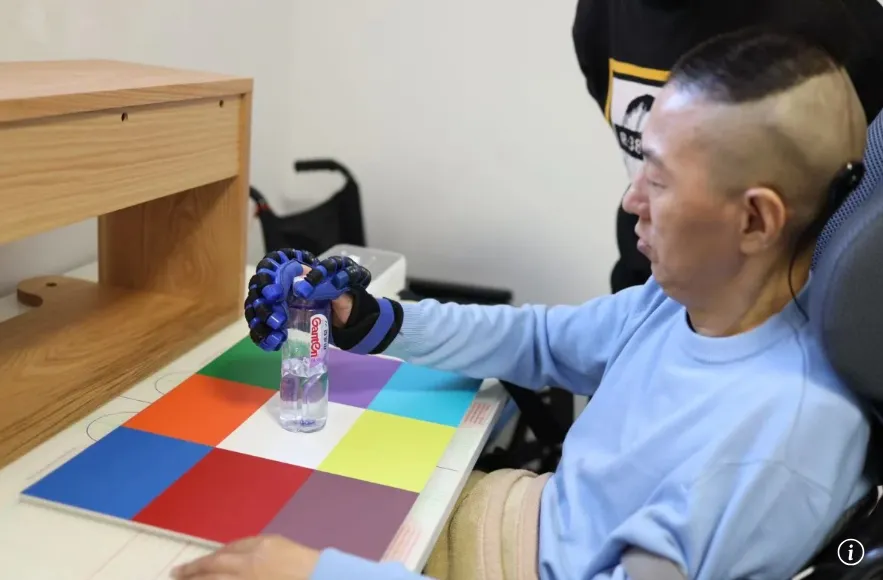
Foundational work also comes from BrainGate, which has spent decades testing algorithms for thought-driven device control. For this, its founder, John Donoghue, was awarded the prestigious Queen Elizabeth Prize for Engineering.

Competition is intensifying: biotech firm Science Corporation raised $230m to develop its PRIMA implant. Designed to treat macular degeneration, it restores visual function by stimulating retinal neurons.
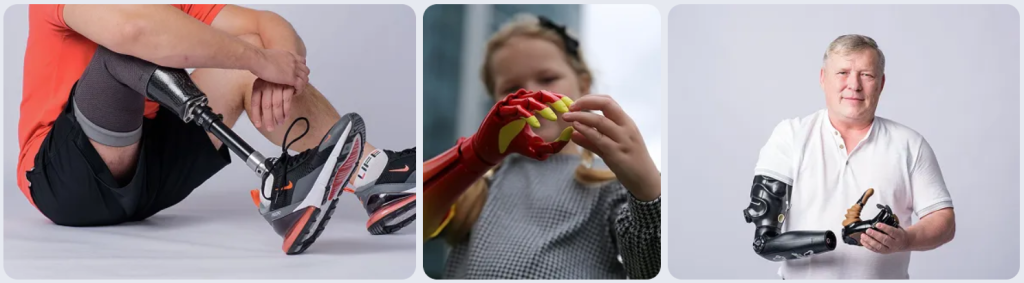
Engineering advances are emerging worldwide. The Russian project Motorica builds high-tech limb prostheses with neural control.


At the same time, specialists at HSE University’s Centre for Bioelectric Interfaces are studying non-invasive control methods and neural decoding of motor commands.
And the door to a new era is opening even for the general public: in November 2025 Phantom Neuro announced a patient registry to connect upper-limb amputees with clinical trials of new neurointerfaces.
Gateway to the Matrix—or hard physics: the hardware hurdles
In startup decks, the future looks like the movies. In practice, Silicon Valley’s most grandiose claims meet physical and biological limits. The toughest obstacle is rejection.
The brain is a hostile environment for electronics. Tissue reacts to foreign microelectrodes by forming glial scars, so the quality of neural signal transmission inevitably degrades. This harsh reality was encountered by the first Neuralink patient: some of the chip’s threads failed a few weeks after implantation.
Then comes the problem of bandwidth and power. Today’s systems can transmit hundreds of bits per second—enough to move a cursor or play a game of chess, but “telepathy” would demand millions of channels.
Attempts to multiply computing power immediately exacerbate battery wear and heat. Raising the temperature around the chip’s operating zone by even one degree can cause irreversible tissue damage—an engineering cul-de-sac yet to be escaped.
Lofty claims from the Valley often mask stern hardware constraints. The chief technological barrier is signal fidelity. Non-invasive methods (various EEG caps) run into the skull’s severe distortion of signals.
At a specialist conference at HSE University, experts noted serious hurdles to using modern “dry” electrodes outside clinical labs. Sensor sensitivity depends heavily on humidity, skull anatomy and how tightly equipment is fixed. Traditional gel electrodes readily ensure reliable contact and high accuracy, but wearing gel kit every day is highly uncomfortable.
The direction of travel: from medicine to neurodata
Developers define BCI’s primary mission as restoring mobility, speech and vision for people with disabilities. This framing helps technology through regulatory procedures, including approval by the FDA. As the field matures, however, medicine is increasingly a springboard for commercial scale: business is shifting towards cognitive augmentation and tools for healthy users.
BCIs create a fundamentally new layer of data. If smartphones can analyse your digital habits, a BCI could in principle capture unconscious emotional responses directly. Tech giants see a marketing instrument that can gauge ad effectiveness at the neural level—and turn thoughts into the fastest control interface.
Beyond Big Tech, neuroresearch has for decades been bankrolled by governments and defence. America’s Defense Advanced Research Projects Agency invests in nonverbal battlefield communication, drone control without the latency of human motor output and algorithms to blunt stress and pain responses.
In the long run, industry insiders talk of transhumanism and hybrid consciousness. Leaders say merging with machines is a necessary condition to compete with artificial intelligence as information-exchange speeds climb.
Part of that future is arriving now: Stanford University scientists have for the first time reliably decoded “inner speech”, mapping cortical electrical signals to basic spoken phonemes and text—potentially minimising the need to move lips or type.
Hybrid consciousness: the blurring of personhood
It is wrong to think of BCI installation as a linear data readout. Using such systems requires mutual co-adaptation. Machine-learning algorithms continually adjust to the user, and the human nervous system, according to recent work in Nature Machine Intelligence, literally relearns to generate impulses in ways that make classification easier for the software.
The boundary between biological and synthetic gradually fades, producing a dilution of agency. Because a third-party decoder stands between human intention and executed action—and “fills in” the signal—users quickly stop seeing where their own will ends and neural-network assistance begins.
A deep illusion of embodiment arises, akin to the rubber hand illusion, but at a fundamental level. The tool ceases to feel external, and moving a cursor by thought can tire a person as much as a full workout at the gym.
New contours of privacy
Direct symbiosis exposes privacy risks. Algorithms can already, with mixed success, decode inner dialogues and imagery—creating a precedent for the absence of privacy even inside one’s own head. Brain waves become detailed fingerprints of individual emotions and mental-health traits.
Preventing leaks and manipulation is pushing the world towards new rules for neural data. In the United States, the MIND Act seeks to protect citizens’ digital thought, and the Federal Trade Commission is developing rules to prohibit the unauthorised commercialisation of human thoughts.
That anxiety is already bleeding into art: new theatre productions, such as The Moon is Always Full, directly raise philosophical questions about the safety of clinical trials and whether digital copies of minds could leak to AI programmers.
From science fiction to a monopoly on thought
The neurointerface industry has left the pages of science fiction and entered the pragmatic grind of engineering. For now, these systems remain prototypes of complex controllers, and their chief task today is to deliver indisputable medical benefit. But the corporate race is not about wheelchairs.
Multinationals are building the platform for the next iteration of the internet, where smartphones and keyboards become relics. The central question of that coming paradigm is who will hold full rights to the information generated directly by your neurons.