



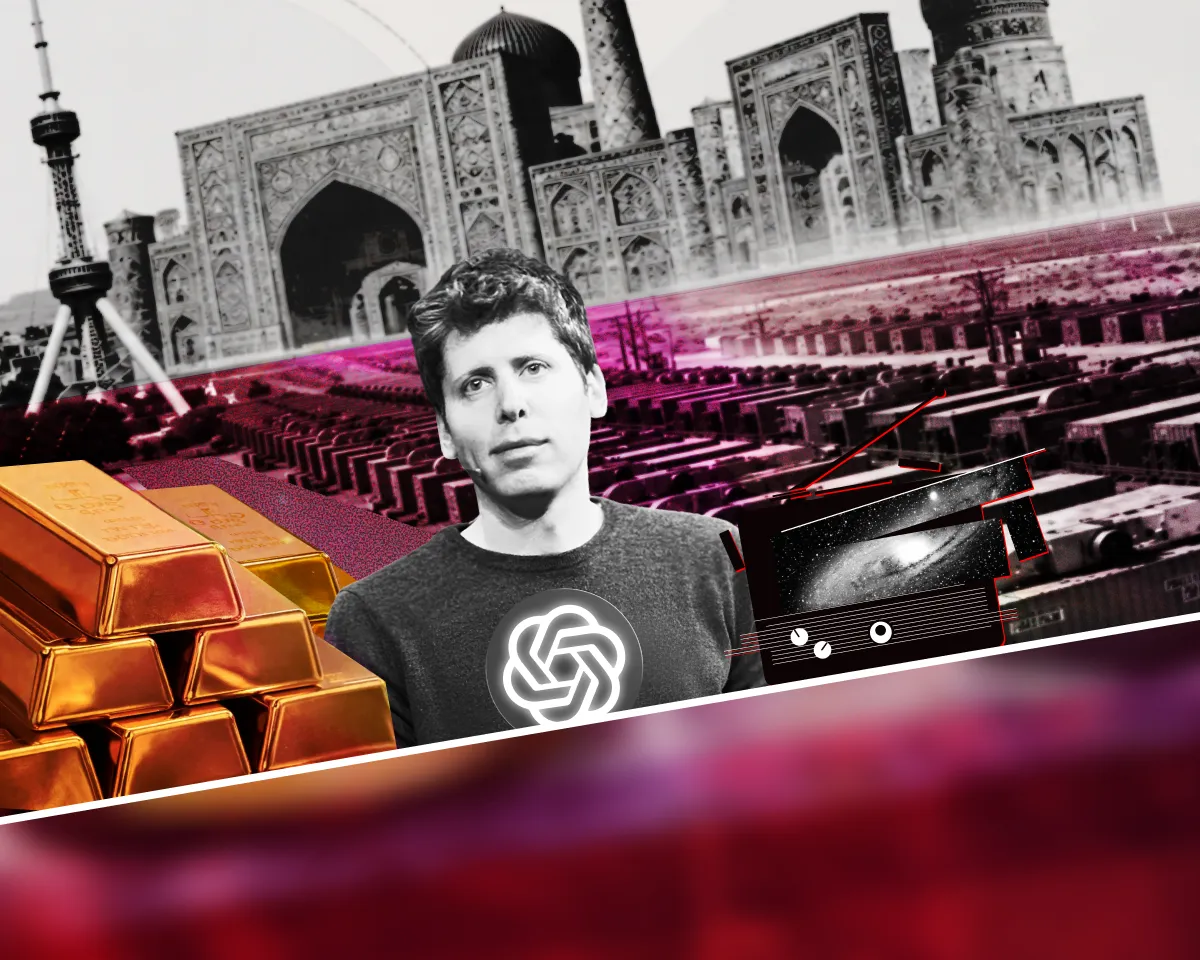
In the latest episode of “Deconstruction,” we discuss Uzbekistan’s crypto initiatives and OpenAI’s corporate challenges. The guest is Mikhail Korneev, head of key products at Asterium.
Mining at the Bottom of the Aral Sea
ForkLog (FL): What is the new mining zone and why is it needed?
Mikhail Korneev (M. K.): The new zone will utilize vast empty lands of Karakalpakstan at the site of the former Aral Sea.
Data centers and alternative energy sources will be built there. This basic infrastructure could eventually become the foundation for creating powerful AI clusters and processing centers.
FL: Participants in the zone do not pay taxes but give 1% of their revenue. Is that a lot?
M. K.: The cost is quite reasonable. In terms of ratio, 1% of mining revenue is roughly 3 to 10% of net profit.
Of course, due to blockchain volatility, there are times of operating at a loss. Companies need to understand this and plan when it is more profitable to shut down mining farms.
FL: The electricity tariff will be 14 cents per kWh. Why so expensive?
M. K.: The historical price of 150 soms per kWh is long gone—due to urban growth, electricity in the country has become much more expensive. The tariff is set to attract large enterprises, both local and international.
The state wants to work with big players. The golden age of mining is over; now everyone must strive for scaling.
FL: How is private crypto business regulated in Uzbekistan, and how much do licenses cost?
M. K.: Illegal mining is prohibited, and the regulator NAPP issues four types of licenses: crypto shop, crypto exchange, depository, and mining pool. A crypto shop license is an entry ticket for small businesses, costing about $30,000-35,000.
A depository license is estimated at around $100,000, while a crypto exchange license is about $800,000. The latter allows working with institutional clients and is an affordable sum for industry leaders.
FL: Why should an ordinary person enter a regulated zone when they can exchange crypto cheaper and anonymously via P2P?
M. K.: The grey P2P market in Uzbekistan practically does not exist now, as the regulator strictly monitors this. Foreign exchanges with unlicensed products are blocked. Moreover, there is a huge risk of fraud in P2P schemes.
The regulated zone allows legal use of crypto. Until 2029, income from crypto assets is tax-exempt, so questions about their origin do not arise unless it’s a criminal case.
FL: You launched crypto cards and tokenized gold. Why is a local token needed if there are more liquid alternatives?
M. K.: This is an infrastructure product for people unfamiliar with crypto but wanting to invest. The token is backed by real gold stored in a bank, and anyone can exchange it for a physical bar.
The main feature is that these tokens can be used for transactions via our crypto cards. A person can load a gold token onto the card and simply pay at the checkout, knowing their asset has appreciated.
Scandals at OpenAI
FL: A lawsuit between Elon Musk and OpenAI’s management has begun. Who will win, and how will it affect the market?
M. K.: It makes no difference who wins because the market is already established. Whether commercial or non-commercial, the direction of AI has long been determined in favor of capitalization and scaling.
Other major players have emerged, such as Anthropic and Chinese neural networks. This has become part of a new reality where memory and computing power are bought years in advance.
FL: If OpenAI runs out of money or the lawsuit leads to its collapse, will it crash the artificial intelligence industry?
M. K.: Even if a bad scenario unfolds and OpenAI collapses, it will not change the market. OpenAI was merely a pioneer that created this large economic segment.
Now, huge corporations have entered this field. OpenAI is no longer such a significant part of it that its disappearance would determine the fate of the entire industry.
FL: Can a trillion-dollar company be built with a soft leadership style?
M. K.: Probably not. If we look at Steve Jobs’ history, he was also a missionary but a tyrant who fired people on the spot.
Pioneering companies always have such tough, sociopathic leaders at the helm.
FL: Will states drive artificial intelligence under strict control, or has the world already become hostage to tech billionaires?
M. K.: States have not become hostages, but government interest will be very clear. No one wants to slide into Orwellian dystopia, but the “Terminator” scenario prompts control measures.
We will likely arrive at a hybrid model. The state will set regulatory frameworks and licenses, but private companies will remain the main drivers of technological progress.
This is a shortened version of the podcast. Watch the full episode:

Subscribe to the podcast: