



Ethereum’s EIP-8142 to Replace Blocks with ‘Blobs’ for Scalability
Ethereum researchers propose using BLOB objects for transaction data.
Ethereum researchers are considering a proposal to transfer transaction data into BLOB objects, which are published alongside blocks. The initiative aims to reduce bandwidth requirements and enhance blockchain scalability.
In the article “Blocks are Dead. Long Live Blobs,” Tony Warshtetter and other developers outlined a draft of the EIP-8142 standard, also known as Block-in-Blobs. The concept proposes encoding transaction data directly into “blobs,” eliminating the need for validators to download and re-execute the full payload.
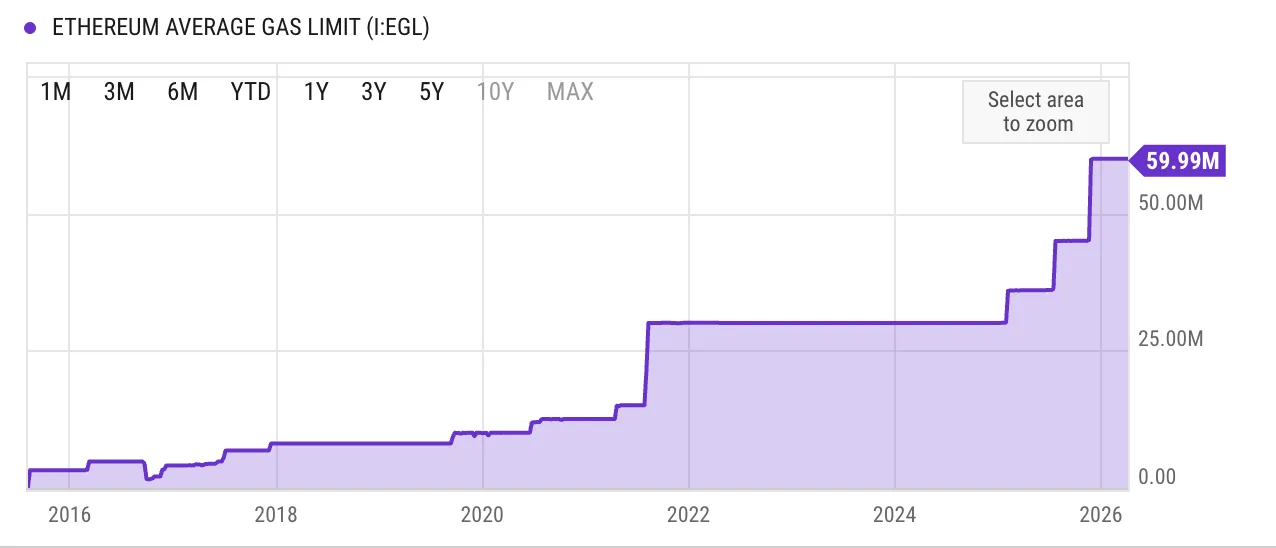
According to the authors, this approach addresses architectural bottlenecks. Increasing block sizes combined with higher gas limits forces validators to process a growing volume of data, which overloads the network and limits its development.
“Blobs” emerged in March 2024 with the activation of the Dencun hard fork as part of the data availability roadmap. Implemented through EIP-4844 (proto-danksharding), they are designed for the efficient transfer of large data arrays, as opposed to standard transaction calls (calldata).
Unlike on-chain storage of all details, BLOB objects allow for cryptographic fixing and verification of data without full replication across the network.
Block-in-Blobs
EIP-8142 builds on the concept established in Dencun. The proposal transfers the main payload, already encoded in the RLP standard, directly into “blobs,” moving away from their use solely as an auxiliary data layer.
Validators will verify cryptographic proofs of BLOB objects and eventually transition to a data availability sampling (DAS) mechanism. This will enable them to verify small fragments to confirm the presence of the entire data array without downloading it in full.
The change is expected to become particularly relevant in the future when systems like zkEVM will be responsible for transaction execution verification. Zero-knowledge proofs (ZKP) can confirm the correctness of operations processing, eliminating the need for their re-execution.
However, ZKP alone does not guarantee actual data availability. Warshtetter explained that in zkEVM, proofs are verified rather than transactions directly. Without a separate control mechanism, information may be hidden even when consensus is successfully reached. The Block-in-Blobs proposal aims to address this vulnerability.
The update will also affect the fee system. Currently, Ethereum separates gas for operations execution and gas for blob usage. In the new model, they may be combined into a single “data gas.” Developers believe this will equalize costs for various forms of data availability and prevent limit overlaps.
ERC-8211 by Biconomy
Parallel efforts are underway to improve the structure of transactions themselves. The Biconomy project, in collaboration with the Ethereum Foundation’s UX division, proposed the ERC-8211 standard, which turns transactions into programmable workflows.
Instead of fixing parameters at the time of signing, ERC-8211 allows operations to obtain on-chain data in real-time, check specified conditions, and sequentially execute multiple steps with a single signature.
The main goal is to reduce the number of failed transactions and enable more complex agent interactions in DeFi protocols.
Both initiatives are part of extensive research within the Ethereum ecosystem. Developers have already outlined paths for network updates through the end of the current decade.
As reported, Gnosis and Zisk, with support from the Ethereum Foundation, developed a framework to unify the fragmented ecosystem of second-layer networks.
Рассылки ForkLog: держите руку на пульсе биткоин-индустрии!